Florida Voters Gave the State $1 Billion a Year to Protect Parks. So Why Are the Restrooms Broken?
Florida voters mandated $1B/year for parks in 2014. Today $824M sits unspent, Long Key's 60 campsites are gone 8 years later, and the statewide repair backlog tops $759 million. Here's the full story.

If you've camped at a Florida state park in the past few years, you may have noticed things. A bathhouse that's been "temporarily closed" since you visited two years ago. A boardwalk trail roped off with orange construction tape. An electrical hookup that doesn't work. A porta-john standing in where a real restroom used to be.
You're not imagining it. Florida's state parks are quietly falling apart, and the gap between what voters were promised and what the legislature has delivered is one of the more infuriating stories in Florida conservation history. Let's break it down.
The Campsite That's Never Coming Back
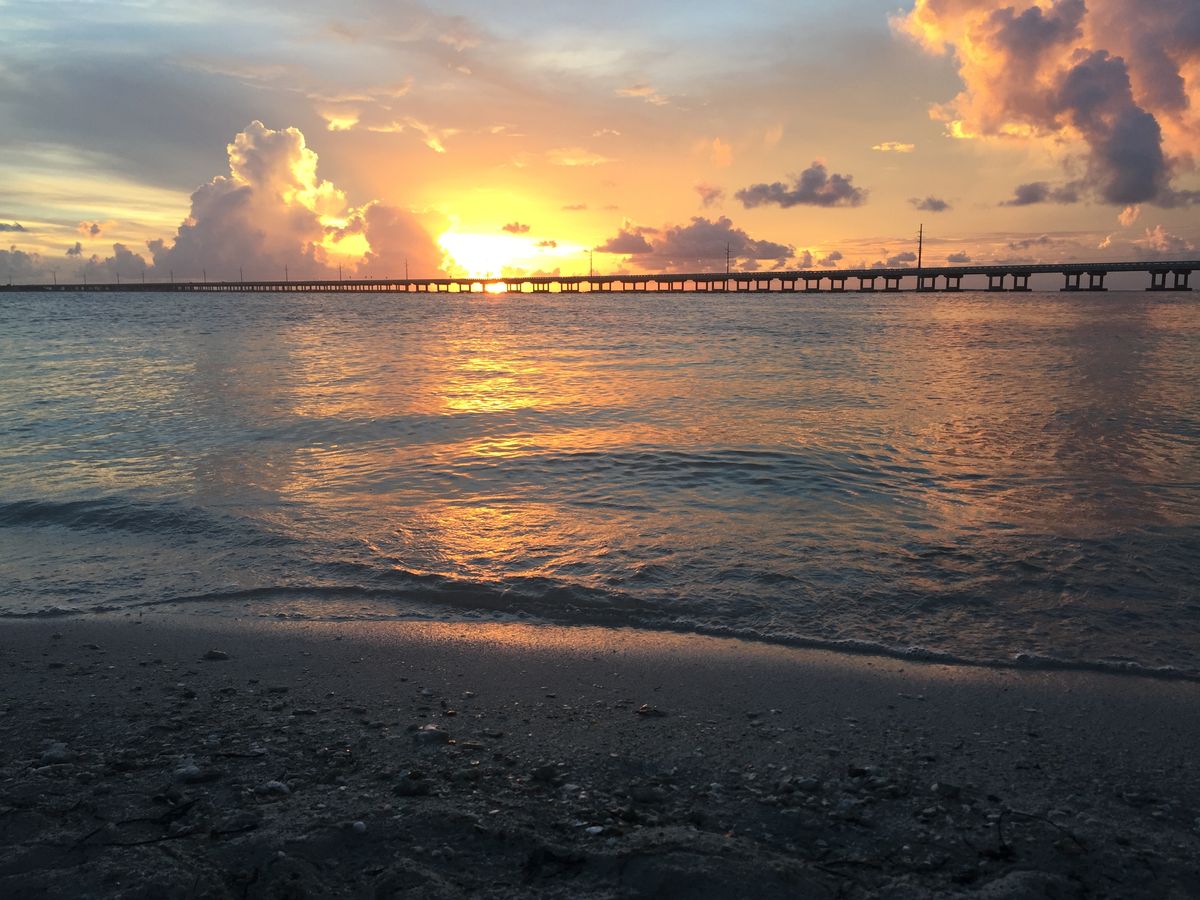
Long Key State Park once had 60 oceanside campsites — tent and RV spots lined up along the Atlantic on a narrow barrier island midway between Key Largo and Key West. Two sides of water, turquoise and clear, the kind of site you booked six months out and drove hours to reach. It was one of Florida's true bucket-list camping experiences.
Hurricane Irma hit Long Key on September 10, 2017 as a Category 4, pushing storm surge over the entire park. The campground — all 60 oceanside sites — was simply gone. Destroyed. Buried in debris and saltwater.
That was nearly nine years ago.
Today, Long Key offers three primitive walk-in tent sites. The oceanside campground has no official plan to be rebuilt. When Hurricane Ian came through in 2022 and hit the already-battered park again, whatever lingering hope there was for a restored campground effectively disappeared. The state's position, as best as anyone can determine: it won't be coming back.
A park that was once a Florida Keys institution is now a day-use area with a handful of backcountry spots. And as we'll see, this isn't an isolated story — it's a symptom of a system that has been chronically, deliberately underfunded for a generation.
"At the legislature's proposed rate of $25 million a year, it would take 30 years to address the current backlog — and that's assuming no new damage in the meantime."
The $759 Million Backlog
In December 2025, Florida's Department of Environmental Protection (DEP) released a report that put a number on what most frequent park visitors already knew in their gut: the state's 176 state parks need $758,974,060 in repairs over the next decade just to restore them to a functional baseline. That's not upgrades. That's not improvements. That's repairs.
The breakdown:
- $499.1 million — Building repairs (restrooms, visitor centers, cabins, pavilions, utilities)
- $174.8 million — Road paving and stabilization
- $20.3 million — ADA accessibility upgrades
- +$1.39 billion additional — Long-term improvement projects not even included in the backlog count
Across the system, that means nearly 90,000 feet of boardwalks that are aging or storm-damaged, 3,300 campsites with failing electrical hookups and septic systems, 850+ historic structures going unrestored, and park roads that are eroding and potholed — a real concern for anyone pulling an RV.
The ADA number deserves special attention: $20.3 million is needed just to bring parks into compliance with the Americans with Disabilities Act. That means right now, today, Florida state parks are technically violating federal disability law.
It's Not Just the Keys: Parks in Crisis Statewide
Bahia Honda State Park — Monroe County, Florida Keys: The Sandspur campground was completely closed for five years following Hurricane Irma. It finally reopened in summer 2022 after a full rebuild. The lesson: even when the state does eventually restore a campground, count on it taking half a decade.
Florida Caverns State Park — Marianna, Panhandle: Hurricane Michael (Category 5, 2018) destroyed over 90% of the park's forest canopy. The campground didn't reopen until October 2021 — three full years later. As of 2026, the river access remains closed and restrooms near the Bluehole swimming area still have non-potable water.
Ellie Schiller Homosassa Springs Wildlife State Park — Citrus County: Three hurricanes in two months in fall 2024 (Debby, Helene, Milton). Currently closed: the historic Underwater Observatory, shuttle boat service, the Discovery Center, both gift shops, and both park restaurants — simultaneously — with no firm reopening timeline.
The Promise: What Voters Actually Passed in 2014
In November 2014, Florida voters passed Amendment 1 — the Water and Land Conservation Initiative — with a staggering 75% of the vote. Three out of four Florida voters said: take one-third of the documentary stamp tax and put it into a dedicated conservation fund, every year, for 20 years.
The mandate: acquire, restore, improve, and manage Florida's conservation lands. At current real estate volumes, that generates roughly $1 billion per year into the Land Acquisition Trust Fund (LATF). Over the amendment's 20-year life through 2035, the total could reach $10–20 billion.
What the Legislature Did With That Mandate
Almost immediately, the legislature found creative ways to route the money elsewhere. In the first year after Amendment 1 passed, lawmakers earmarked a mere $17.4 million for actual land acquisition — while routing $160+ million to agency overhead. Documented misuses included items as surreal as hats and DirecTV subscriptions billed to the constitutionally-protected fund.
Conservation groups sued in 2015. In 2018, a Leon County circuit court judge ruled the funds must be spent on land acquisition as voters intended. The state appealed — and the appeals court declared the case "moot." No binding enforcement ever happened.
Meanwhile, Florida Forever — funded at $300M/year under Gov. Bush — was completely zeroed out under Gov. Rick Scott. The House's FY 2026–27 proposal zeros it out again, while $824 million sits unspent in the LATF.
The $824 Million Elephant in the Room
While the legislature debates whether to give parks $25 million for repairs, the Land Acquisition Trust Fund is projected to have $824.7 million in uncommitted cash for fiscal year 2026–27. That's not money already spent. It's sitting there, unallocated.
The coalition of 32 conservation organizations says: you don't need new taxes. You don't need new revenue. Give $100 million to park facility repairs and $20 million to ADA upgrades — that's $120 million, less than 15% of the uncommitted balance — and start putting a real dent in the backlog.
"The coalition's ask is $120 million — less than 15% of the $824 million sitting unspent in the account voters created for this purpose."
And Amendment 1 expires in 2035. Nine years from now, the constitutional mandate goes away. If the legislature won't use this money at scale while the mandate is in force — what happens when it's gone?
What This Means for You as a Camper or RVer
Campground infrastructure: 3,300 campsites with aging electrical hookups, water pedestals in disrepair, and septic systems past their useful life. For RVers dependent on 30- or 50-amp service, a failed hookup isn't an inconvenience — it's the whole trip.
Roads: $174.8 million in road needs means deteriorating entrance roads, potholed campground loops, and gravel roads that wash out after heavy rain. Anyone who's pulled a rig around a tight campground loop knows how much road quality matters.
Bathhouses and restrooms: The single biggest backlog line item. "Closed for maintenance" signs on bathhouses are increasingly common and increasingly long-lived.
Boardwalks and trails: 90,000 feet of boardwalk infrastructure across the system. When they close, so do the signature experiences — spring viewing platforms, coastal overlooks, mangrove loops.
What You Can Do
Florida's 2026 legislative session is underway right now. Budget decisions in the next few weeks will determine the pace of park recovery for years to come.
Contact your legislators directly. Find your Florida House and Senate representatives at myfloridahouse.gov and flsenate.gov. Personal constituent messages mentioning specific parks you've visited carry more weight than form letters.
Contact Senate President Ben Albritton and House Speaker Daniel Perez directly — these are the two people who set the legislative agenda.
Support the coalition — Florida Wildlife Federation, Audubon Florida, Friends of Wakulla Springs, Sea Turtle Conservancy, and 28 other organizations signed the letter. Consider becoming a member or donor.
Share your story. If you've experienced deteriorating infrastructure — a failed hookup, a closed bathhouse, a campsite that was never rebuilt — share it publicly on ReserveAmerica, The Dyrt, or social media. Personal stories cut through in ways statistics don't.
The Bottom Line
There's a 60-site campground at the bottom of the Florida Keys that used to be one of the best camping experiences in the state. It's been gone for eight years and it's not coming back. Meanwhile, nearly a billion dollars sits in an account that Florida voters constitutionally mandated for parks and conservation — and the legislature is proposing to spend $25 million of it on repairs.
This isn't a funding problem. It's a political will problem. The money exists. The mandate exists. The constitutional authority exists. What's missing is a legislature that takes seriously the promise made to Florida voters — and to Florida's land — a decade ago.
The session is happening now. Make some noise.
Sources: Tampa Bay Times · The Invading Sea · Ballotpedia · Sierra Club Florida · Florida Phoenix · Florida State Parks · Florida Wildlife Federation