Sponges - How One Little Animal Built a Town in Florida
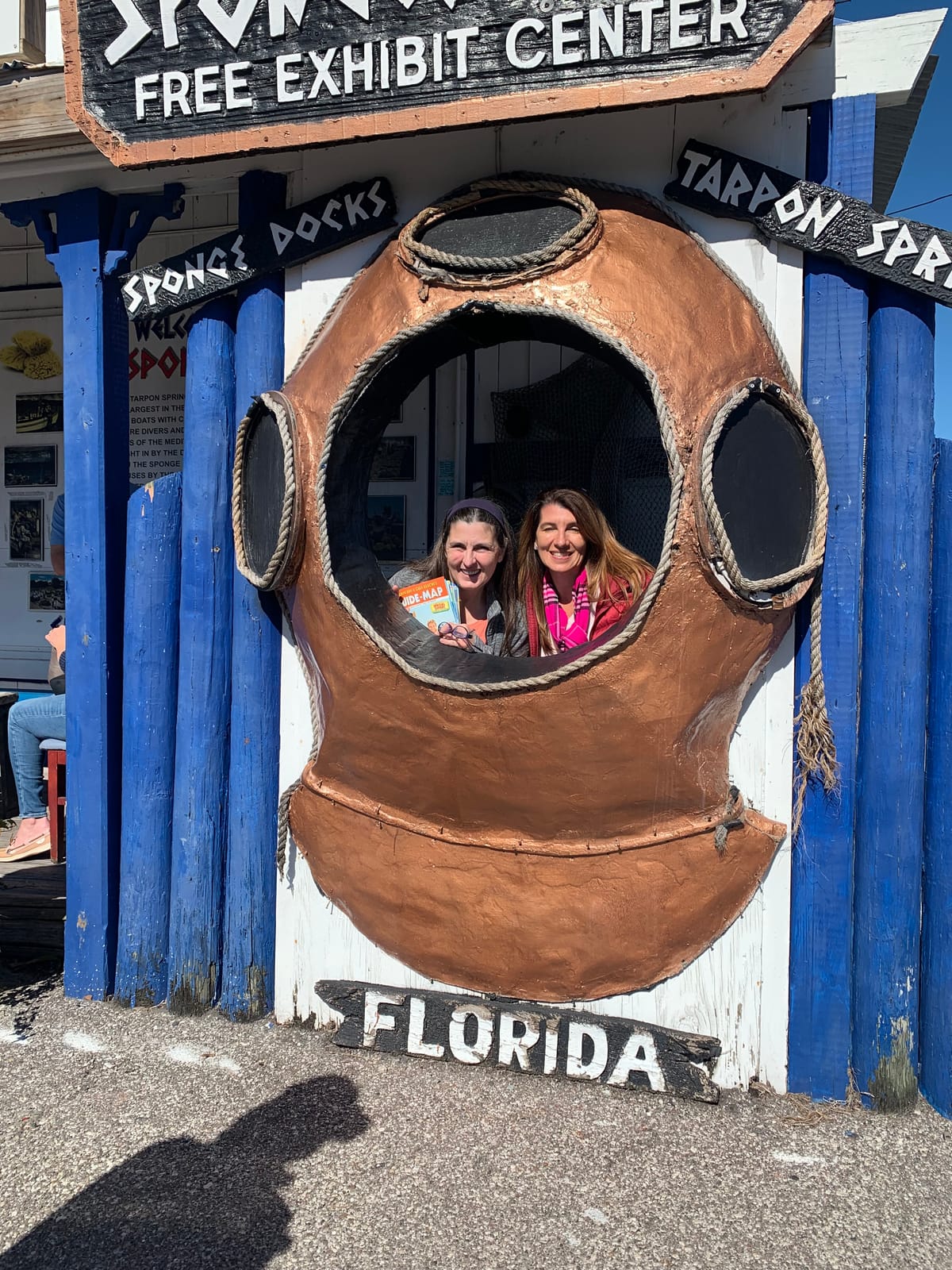
Fifteen years ago, I moved to Tarpon Springs, one of the most interesting cities in Florida. And even though, I had grown up in North Florida, I didn’t really know much about Tarpon Springs until I moved here. What I found was a charming and friendly seaside community, that is dominated by Greek restaurants, bakeries, shops and other business. Much of this business community is located along a bustling waterfront that sits right against the Anclote River where it winds its way out to the Gulf of Mexico. Any given night you can walk along this waterfront and hear people speaking in Greek or you might hear someone playing the bouzouki or you can sit down and have a delicious Greek meal. It feels a lot like being in Greece. First, how lucky am I to have ended up in this historic and kind of magical town? But more importantly, how did a Greek American town end up right here in central Florida on the Gulf of Mexico? It is not as random as you think. In truth, it is a fascinating story about how connected we all are to the ocean and how an entire community can be brought to life by one little animal. The animal that Tarpon Springs is most known for. And no, it is not the Tarpon. Though they are quite interesting creatures too! The animal that Tarpon Springs is most known for is actually the sea sponge.
So how in the world did this little animal, lead to all this?
That story starts in ancient times, when people living in what is now modern-day Greece, began collecting sponges from the sea and discovering they were very useful for humans. As you may have guessed, sea sponges were used for bathing and cleaning up a house. But they were also used for other things like cushioning a warrior’s helmet and armor or using them to help better distribute paint or ink.
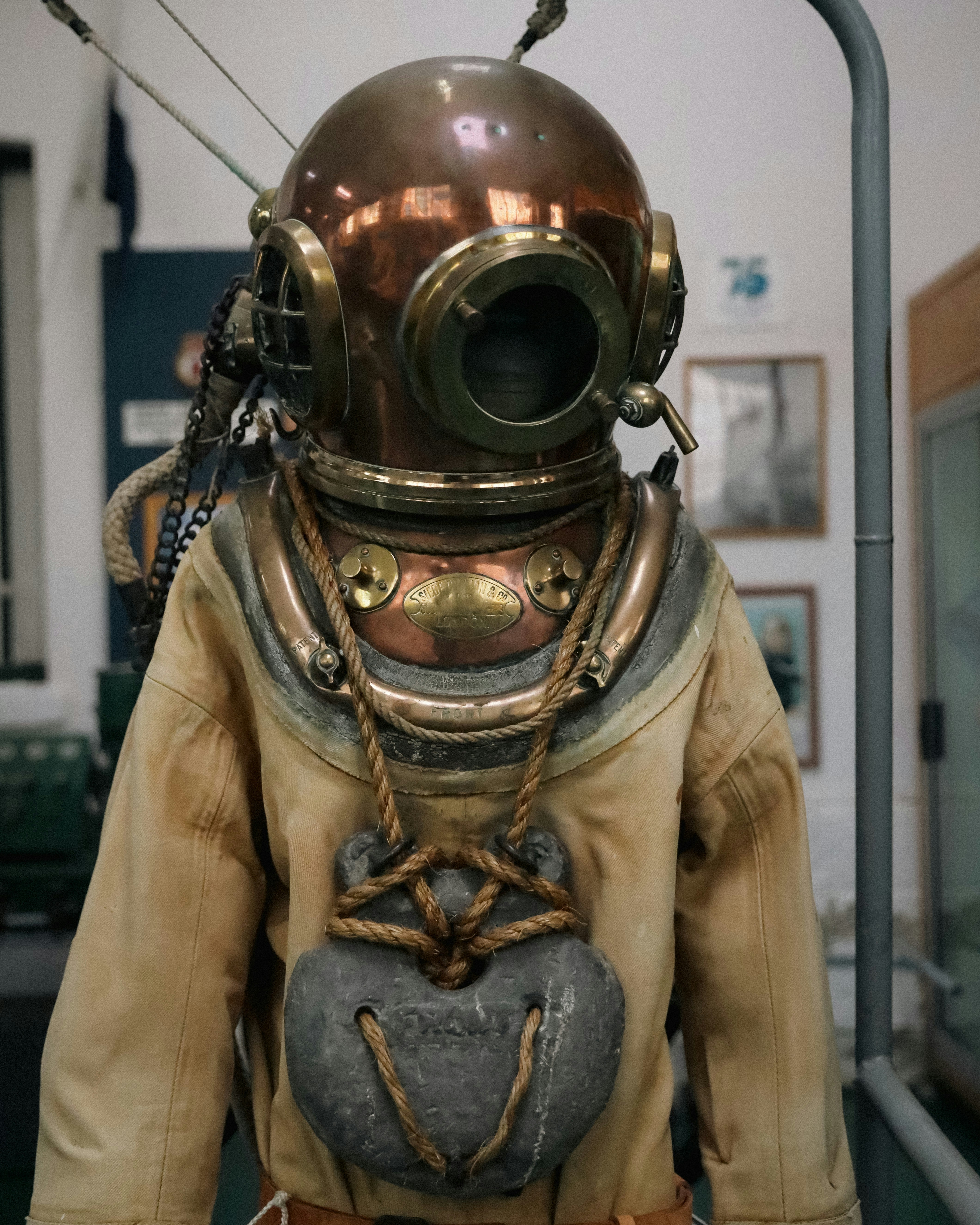
As time went on the people from Greece started finding interesting ways to go below the water to gather as many sponges as they could. One way to do this was by free diving with a rope connecting them to a boat, while they held a large rock. The large rock helped them sink to deeper bottoms where they gathered many sponges at once. When they were ready to come back up, they would give the signal and everyone else on the boat would pull them back up. They kept improving their skills and their sponge trade continued to thrive. Eventually, by the late 1800s, they developed a heavy diving suit known as the Skafandro, meaning “boat-man”. This suit included a full body airtight suit made of thick canvas and rubber, heavy boots that each weighted between 9 to 13 pounds and a large copper and brass helmet with a breast plate and viewing windows. The suit was connected to an air pump on the boat, that allowed the divers to breathe. The use of the suit dramatically increased both where sponges could be harvested from (deeper waters) and how much could be harvested at once. But it is worth remembering that this was all before decompression sickness was understood and lots of divers died due to the bends. In fact, it is estimated that across the Mediterranean the suit caused roughly 10,000 deaths and 20,000 cases of paralysis. But for the Dodecanese Islands, life in general was a struggle. It is a longer story, than we have time for here, but after the brutal and bloody War of Greek Independence from the Ottoman Empire, the 1830 London Protocol, gave the Islands back to the Ottoman Empire, as a bargaining chip rather than letting them remain a part of Greece. They lived under foreign control until 1948. During that time, they suffered all kinds of natural and man-made calamities, and this brings us to how this story becomes so connected to life here in Florida. Like many people in Europe at the time, there was rampant poverty and oppression. The United States was a land of opportunities.
Meanwhile over in Florida, in the mid 1800s we had our own sponge trade going on but it was mostly centered in the Florida Keys. Until one day, Florida Keys Turtle hunters ventured all the way up to the mouth of the Anclote River in Tarpon Springs. The Turtlers would spread out large nets on the grassy sea bottoms hoping to entangle turtles who were grazing on sea grass. But in this location, they were thwarted because they kept getting snagged on huge sponge beds. Hence, they discovered what would become the biggest industry in Florida at the turn of the century, the Sponge Industry.
With an abundance of sponge beds discovered, locals soon began using an old method of going out on a small boat and using a long pole with a hook to pull up sponges. This was called “hooking”. This got the industry going in Tarpon Springs. But it had its limitations. There were more sponges to be had in deeper waters, but people living here at the time did not have the skills to get to them. That was until a Greek immigrant and businessman named John Cocoris recruited 500 sponge divers from the Dodecanese Islands to bring their advanced diving techniques and their advanced diving gear to put to use in Tarpon Springs. Their success was astounding. Over the next 30 years, the sponge trade in Tarpon Springs would be bigger than Florida’s citrus or tourism industry at the time. And the Greek sponge divers, called Spongers, used their new found wealth to build this thriving city in North Pinellas county that reflected who they were and where they came from. The good times remained until the sponges experienced a blight in the 1940s and almost wiped out the industry. By the time the blight was over most of the world had moved onto manufactured sponges. But there was a slight renewal in the 1980s when sponges in the Mediterranean also suffered a similar fate. As it stands today, the trade is not what it was at its peak but Tarpon Springs is still known as the Sponge Capital of the World. And while the Sponge Industry still brings about 2 million dollars’ worth of revenue a year, visitors coming to see the cute little Greek town in Florida and learn about sponges brings in about 20 million. Even today this town thrives because of the simple sea sponge.
If you want to learn more about how spongers operated in Tarpon Springs when the industry was thriving, check out the fascinating video from 1939!
Back when Spongers were harvesting sponges, like most people from that time, they were more focused on what sponges could do for them out of the water. Natural resources were viewed as something used to a make life better for humans. They were probably not thinking much about what these animals were doing for us in the water. Whether in Greece or in Florida, Spongers were just trying to make a living, take care of their families and communities and live a decent life. But as the years went on, scientist began to discover all the important things sponges do as ocean creatures. Soon we began to think about not just what these creatures can do for us outside of the water, but also think about what important jobs they have in the water.
Scientists believe that Sea Sponges have existed for over 600 million years and are believed by many to be the oldest recognizable animal group on earth. There are estimated to be over 5,000 different species located in marine environments around the world. And 200 different species that are found in fresh water.
They have no brains, no nervous system, no hearts and not even a digestive track. They attach to hard surfaces and stay in the same place their whole adult lives. But because of how they get nourishment, they are a vital part of keeping our oceans healthy.
Sponges belong to the phylum porifera, meaning pore bearers. This is fitting because they are covered with tiny little intake pores called ostia. Water flows in through the ostia driven by the beating flagella of collar cells. These are like little tails making their own current. As the water flows through the pores the collar cells trap microscopic food particles such as bacteria, plankton, algae or organic debris out of the water. The Sponge digests this food directly in the cells and then pushes the filtered water through a larger top opening called the osculum. A single basketball sized sponge can filter around 425 gallons of water per hour or over 10,000 gallons a day. They are the ultimate biological water treatment plants.
To see a cool example on how sponges can filter water check out this video
But this not the only way sponges help the oceans. They are also sessile, meaning once they attach to a hard surface, they remain there for the rest of their lives. By anchoring themselves to hard surfaces like rock or dead coral skeletons, they can act as a type of glue, making the whole habitat stronger and more resistant to erosion. Then as they start to grow, they can add lots of dimensions to wherever they are. Soon other animals will use them for feeding or hiding or even as a place to reproduce. And more life and diversity attract more life and diversity. It’s kind of amazing to consider how one little creature can create so much community both above and below the ocean.
When you start to learn about how important they are under the ocean, you may start to question if we should be harvesting them at all?
There have been times in the past when sponges were over harvested. This mostly occurred when spongers employed the hooking method which took the entire sponge when harvesting. Today, there are much stricter laws about both where and how sponges can be harvested. Sponges must be at least 5 inches in maximum wet diameter when harvested, landed, cured, sold or possessed. Also, divers harvesting commercial sponges must cut the sponge off in a way that leaves the base attached. This allows sponges to regrow. Many spongers also report that they tear off pieces of the sponges as they harvest them and leave them in the sponge bed. Because sponges reproduce both sexually and asexually, the small broken off pieces often attach to the hard bottoms surfaces and start regrowing.
But sponges are not invincible. Blight and Red tide have wiped out large amounts of sponges before. And while they are great at filtering bacteria, viruses, phytoplankton and organic matter out of the water, they can only do so much.

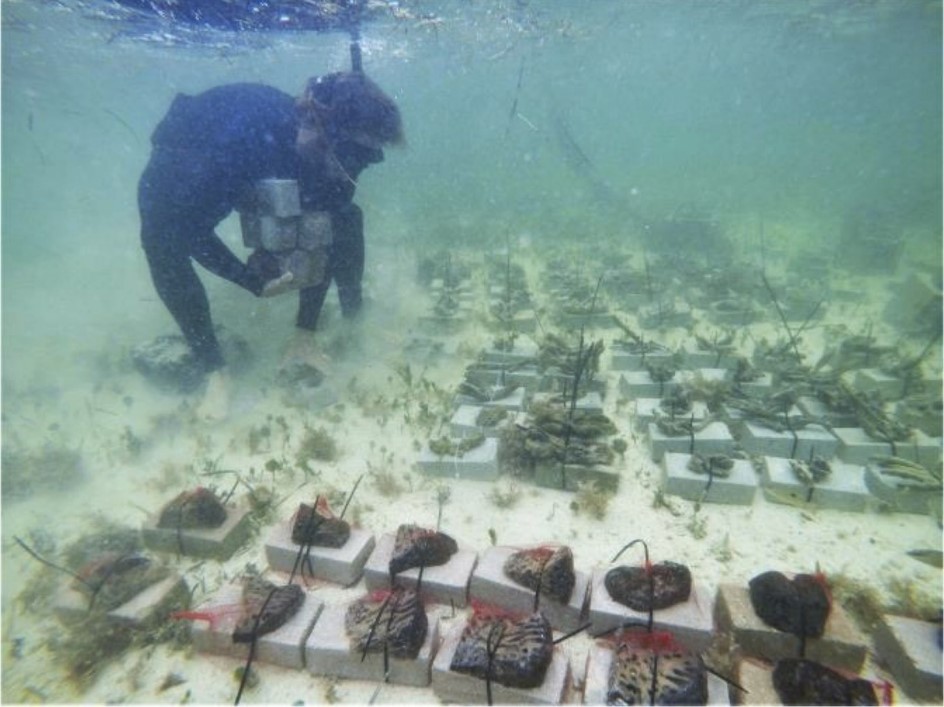
Perhaps the most important thing we can do to help sponges, is to do what we can to keep our oceans clean. For example, in your own yard, don’t use fertilizers or pesticides. Remember, whenever it rains, all of this stuff and any chemicals in your yard end up in storm drains, which end up in the ocean. Support organizations like the Florida Fish and Wildlife Conservation Commission and Florida Sea Grant. These organizations do research and restoration. The organizations listed below also do restoration dives where you can use your diving skills to help out.
https://www.icareaboutcoral.org/
For more information about sponge restoration in Florida check out this article.

Before you commit to only using synthetic sponges, think again. Most of them are petroleum based products, that shed tiny fibers of plastic or melamine-formaldehyde resin that wash down kitchen sinks. Because they are too small to be filtered out at treatment plants, they end up flowing directly into rivers, lakes, and oceans. They also don't decompose naturally and can take hundreds of years to break down. Instead use a cellulose based sponge or even better yet, a dishcloth or cleaning towel that can easily be rewashed and reused.
I know this is all so much to absorb! Haha! But it really is fascinating to think how many peoples lives have been impacted by this one sea creature. I mean obviously the ones who picked up their whole lives and moved around the world to be a part of the sponge trade. Sponges really did build my community.
But really because sponges are a vital part of our ocean systems, sponges have impacted us all.